
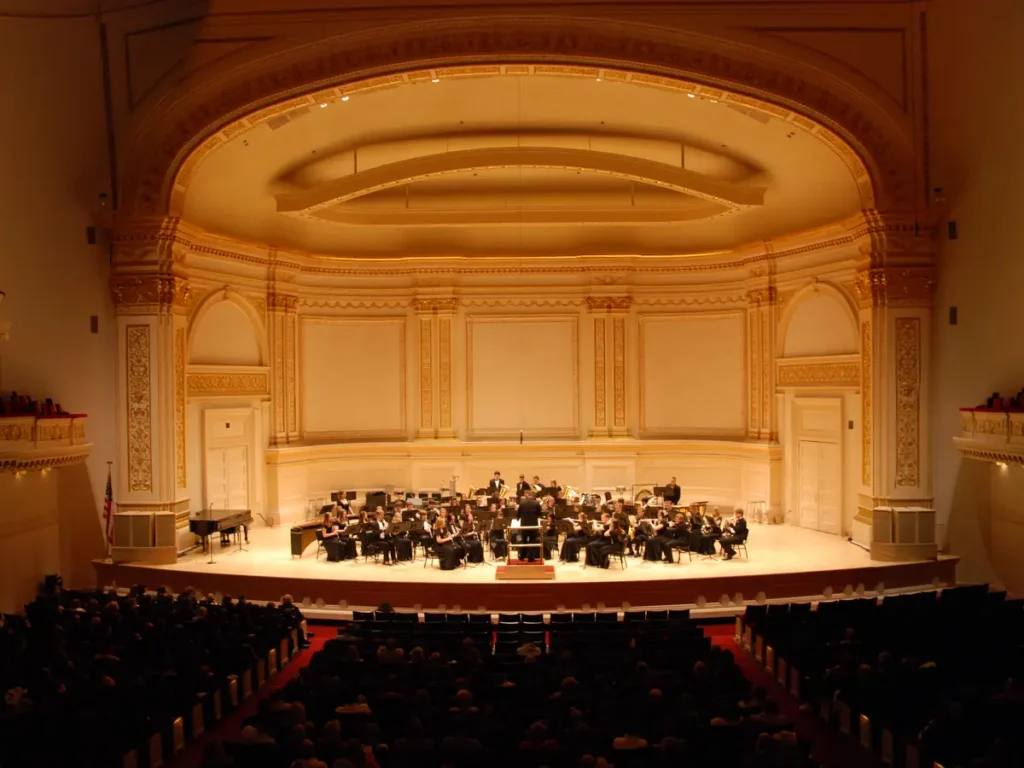
A student ensemble can sound polished in its home rehearsal room and still feel unsettled on the first day of a tour. The stage is different, the sound travels differently, the audience is new, and the schedule leaves little room for adjustment. None of this means the group is underprepared. It simply means that performing away from home is its own skill, and one that can be practiced before departure.
Expect the Room to Change Your Performance
Every venue has its own character, and it changes from one tour destination to the next. A concert hall, a theatre, a church sanctuary, and an outdoor stage each respond differently to sound. Musicians and singers may find they cannot hear each other the way they do at home. Dancers may encounter a different floor surface, a different stage depth, or unfamiliar wing space. Actors may notice that projection feels different when the audience sits farther back.
Directors can prepare students by explaining these differences ahead of time. Students who expect the room to feel different are far less likely to be thrown off when it does. A short conversation about what might change, and how to respond, can make the first moments on a new stage feel manageable rather than stressful.
Rehearse Away From Your Comfort Zone
One of the most practical steps is to change the rehearsal environment in the weeks before tour. Consider these approaches:
- Move the ensemble. Rehearse in the gym, the cafeteria, the auditorium lobby, or outdoors so students experience different acoustics and spacing.
- Rearrange the setup. Change seating, standing order, or stage positions so students learn to listen and adapt rather than rely on familiar cues.
- Run it cold. Practice performing the full program without a warm-up lead-in, since tour schedules do not always allow ideal preparation time.
- Perform for guests. Invite another class or a group of parents so students practice performing for people they do not know.
Plan for Travel Fatigue
Performance quality is closely tied to rest, hydration, and energy. After a long travel day, students may be excited but tired. Build realistic expectations into the plan by scheduling the most demanding rehearsal or performance for the part of the day when students tend to feel best, and by reminding them to drink water and eat regular meals.
Vocalists and wind players may need extra attention, since dry air and extended talking can affect their instruments. Dancers benefit from adequate time to warm up and stretch before moving onto an unfamiliar floor.
Prepare the Logistics Too
Smooth logistics protect the performance, and planning your tour as early as possible leaves more room to get them right. Directors planning for the first time may also find this guide on what every director needs to know before planning a student tour helpful, and reviewing what is included in a tour clarifies which details are handled for you. Directors often find it helpful to confirm arrival times, load-in procedures, and warm-up space in advance, and to share a clear schedule with students and chaperones. Assigning students specific responsibilities, such as moving equipment or checking uniforms, keeps the group organized and gives everyone a sense of ownership.
Frequently Asked Questions
How early should students arrive before a performance? Arrival time depends on the venue and the program, but groups generally benefit from extra time for load-in, warm-ups, and getting comfortable on stage. Your tour schedule should reflect these needs.
What if the acoustics are very different from our rehearsal space? This is common. Encourage students to listen more than usual, follow the director’s cues, and trust the preparation they have done. A short run-through in the space, when available, helps them adjust.
How can students manage nerves before performing in a new place? Familiar routines help. Consistent warm-ups, breathing exercises, and a calm, predictable pre-performance schedule can give students a sense of control even in a new setting.
Should we change our repertoire for a tour? Many directors choose pieces the ensemble knows well, so students can focus on adapting to the venue rather than learning new material under pressure.
Educational Performance Tours has been designing customized music, dance, and theatre tours since 1998, with itineraries that include performance opportunities and workshops tailored to each program. Have more questions? Visit our FAQs. If you are ready to take your ensemble on the road, contact Educational Performance Tours today to request a quote.